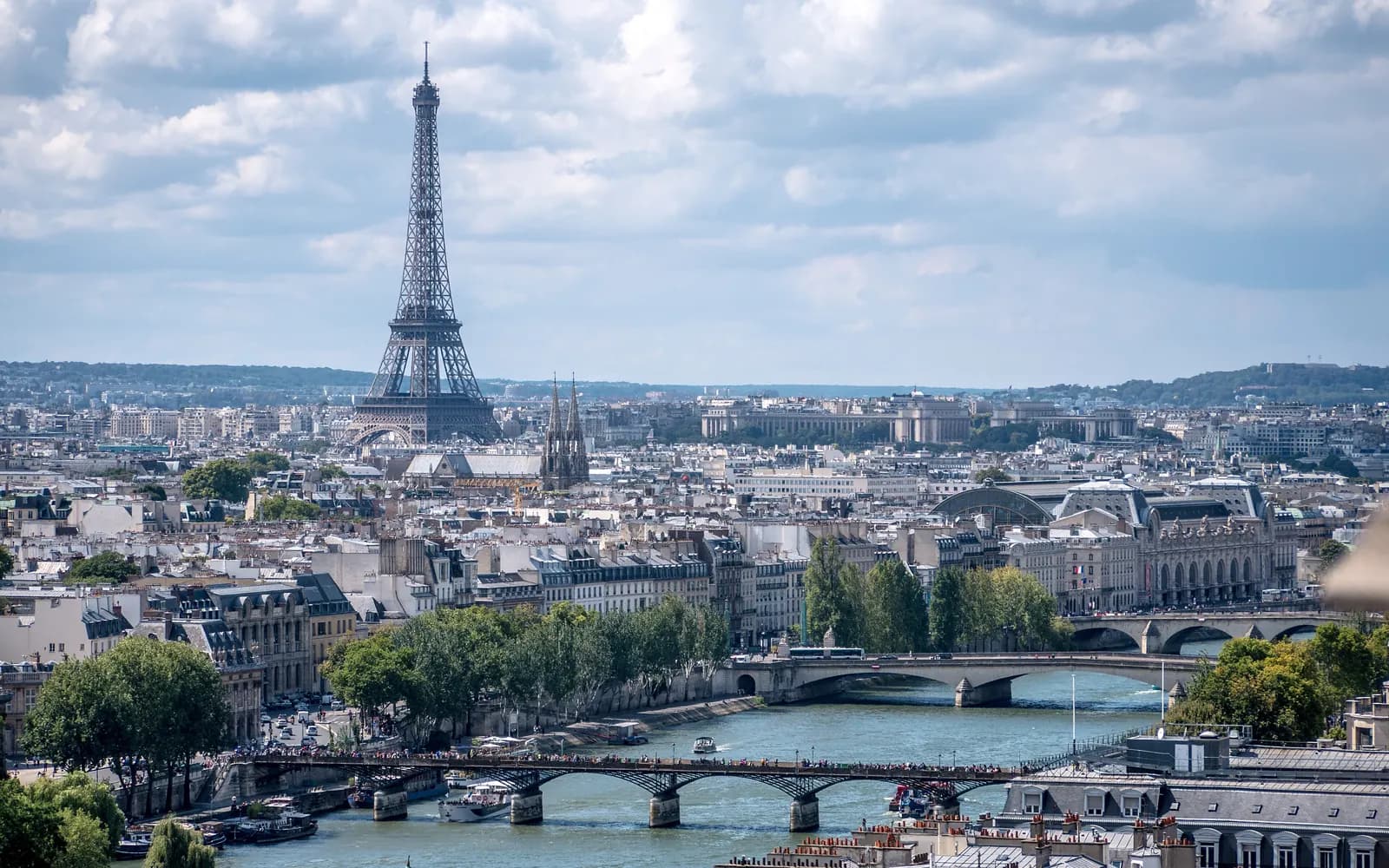
Every Paris guide will tell you to see the Eiffel Tower, the Louvre, and Montmartre. What they will not tell you is that if you try to visit all three in a single afternoon, you will spend most of it on the metro, tired, and annoyed.
The real challenge in Paris is not finding things to do. It is building a day that makes geographic sense. The neighborhoods are distinct, the metro takes longer than it looks on a map, and the crowd timing at major attractions can make or break your morning.
This 3 days in Paris itinerary is designed around the opposite of that problem. Each day stays in one corner of the city. Stops are clustered so the walking is short, the metro trips are intentional, and your energy budget is protected.
Want this customized for your exact travel dates and pace? Build your Paris plan free with Itnify, no credit card needed.
Before You Arrive: Two Things to Handle Immediately
Eiffel Tower tickets
Book these at least 2 weeks before you travel. On weekends and during peak season (April through October), summit slots sell out weeks in advance. The lift to the top requires a timed ticket, you cannot simply show up and pay.
If your dates are flexible, book first, then plan the rest of your days around that time slot. Losing your Eiffel Tower window because you forgot this step is an expensive mistake.
Navigo Easy transit card
Pick one up at any metro station on arrival. Load it with single-ride carnet packs. Typical cost is around 2.15 EUR per ride. It works on metro, RER within Zone 1-2, and most bus routes. Significantly faster than buying paper tickets at machines throughout the day.
Day 1: Le Marais and Ile de la Cite
Why here first
Le Marais is the ideal starting neighborhood. It is central, compact, and wildly walkable. Most of the major stops are 5 to 10 minutes apart on foot. After a long travel day, you want density, not a map full of metro connections.
Morning
Start at Place des Vosges, the oldest planned square in Paris. It is calm early in the day, good for coffee nearby, and sets the right tone. Takes about 20 minutes to absorb before moving on.
Next: Musee Picasso. Give it 90 minutes. It is the right museum size for Day 1: not so large it drains you, not so small it feels rushed. Book tickets online a few days ahead to skip the entry queue.
Midday
Lunch at L'As du Fallafel on Rue des Rosiers. Expect to pay 6 to 8 EUR for one of the better street lunches in Paris. Arrive before 12:30 or after 14:00 to avoid the longest lines.
Afternoon
Cross to Ile de la Cite by foot via Pont Marie: about 10 minutes. Two key stops here:
Sainte-Chapelle first, always. The security line builds fast. Pre-booking helps. The stained glass on the upper chapel is genuinely one of the more impressive interiors in the city, and it takes under an hour.
Then the Notre Dame exterior and the island itself. The interior is partially restricted depending on restoration progress, but the island walk and the views from behind the cathedral are worth an hour of slow wandering.
Evening
Stay local in Le Marais. First-day tiredness after travel hits harder than people expect. A good dinner in the neighborhood beats a long metro ride to somewhere theoretically better.
Day 2: Montmartre and the 9th Arrondissement
This is physically the hardest day. Montmartre means hills, stairs, and a lot of up-and-down. Starting early is not optional, it is the difference between a calm morning and a wall of tourists.
Why Montmartre rewards early risers
Sacre-Coeur at 8:00 am is a fundamentally different experience than Sacre-Coeur at 11:00 am. The steps are quieter, the view from the top of the hill is unobstructed, and the side streets around Abbesses feel like a real neighborhood rather than a visitor attraction.
Morning
Arrive at Sacre-Coeur by 8:30 at the latest. Do the view from the exterior terrace, then descend slowly through the back streets toward Abbesses and Rue Lepic. The side streets here: not the main square: are where the real Montmartre character lives.
Line 12 is your best metro connection for this area.
The mistake to avoid
Do not add the Eiffel Tower to this afternoon. The commute from Montmartre to the Eiffel area is roughly 40 minutes via metro, and that stretches in practice with transfers and platform waits. You will arrive tired and spend your evening view already exhausted.
The Eiffel Tower belongs on Day 3. Trust the structure.
Midday and afternoon
Explore the Pigalle side of the neighborhood if street art and local cafes interest you. Simple cafes near Abbesses work better than tourist spots on the main square: cheaper and calmer.
If your legs are heavy by early afternoon, cut one optional stop and find a terrace. A 30-minute reset keeps Day 3 strong.
Evening
Try Au Bon Coin or any neighborhood bistro for a straightforward dinner. Budget around 15 EUR for a solid meal. Day 2 ends early: this is intentional.
Day 3: Saint-Germain, Musee d'Orsay, and the Eiffel Tower at Sunset
Day 3 is the reward for the structure you built earlier. You are rested enough to appreciate a slower morning and earn a proper evening.
Morning in Saint-Germain
Breakfast at Cafe de Flore is worth the cost once. Croissant and coffee will run around 8 EUR. The atmosphere is the product, you are paying for the location as much as the food.
From there, walk through Luxembourg Gardens. Give it 30 to 40 minutes. The garden is enormous and the morning light is good. Do not rush this.
Musee d'Orsay
Plan 2 to 2.5 hours. Choose a focus list before entering: Impressionist galleries plus one sculpture wing, for example. Without a clear internal map, you will wander into fatigue faster than you expect.
Pre-booking is strongly recommended. The Orsay queue at 10:00 am can add 30 to 45 minutes without a reservation.
Eiffel Tower at sunset
Your timed ticket (booked 2 weeks ago) should land in late afternoon or early evening. Walk from the Orsay toward the Champ de Mars: about 15 minutes on foot.
If you want the summit, be realistic about what that involves: lines even with a timed ticket, wind at the top, and a compressed view window. The second level and the Champ de Mars lawn are often better experiences with less stress.
Transit fallback: Line 13 or RER C depending on your exact origin if you need to metro to the Eiffel area.
Final evening
Stay near Trocadero or back toward Saint-Germain for dinner. One last long metro crossing on the last night is a poor use of your remaining energy. End the trip within walking distance of where you already are.
Practical Rules for Paris That Most Guides Skip
Buffer your metro estimates by 10 minutes. Transfers, platform stairs, and midday crowding make metro apps consistently optimistic. A 20-minute journey in off-peak hours becomes 30 in practice.
First entry or late entry beats midday. For Sainte-Chapelle, Musee Picasso, and Orsay: aim for 30 minutes before closing if you cannot do early morning. Midday is peak crowd and heat.
One unscheduled slot per day is worth more than an extra attraction. Paris always produces a long lunch, a spontaneous bookshop, a market that catches your eye. Keep room in your plan for the city to happen to you.
Who This Itinerary Works Best For
This is designed for first-time Paris visitors who want a real trip, not a highlight reel. It also works well for people returning who felt burned by the "cross the city five times in one day" experience common to generic top-10 guides.
If you travel slowly: remove the afternoon museum on Day 3 and extend lunch. If you travel fast: add an early evening walk on Day 2 in Pigalle, but keep the neighborhood structure intact.
Frequently Asked Questions
How many days is enough for Paris? Three days covers the major neighborhoods and iconic landmarks at a reasonable pace. Five days lets you add Versailles, the Catacombs, and more time in smaller arrondissements without feeling rushed.
Is the Paris Museum Pass worth it for 3 days? Only if your itinerary is dense with 3 or more major paid sites in quick succession. For this plan, skip it, you are mixing paid and free attractions, and the savings calculation usually does not favor the pass unless you visit 4+ museums.
When should I book Eiffel Tower tickets? At least 2 weeks ahead for weekend dates in spring or summer. 4 to 6 weeks ahead during peak months (July, August, April cherry blossom window). Book the moment your dates are confirmed.
Is the Paris metro easy for first-timers? Yes, more than most visitors expect. The lines are color-coded, most platforms have English signage, and Google Maps gives accurate directions. The main frustration is navigating the transfer hallways, which can be longer than the ride itself.
What is the best neighborhood to stay in for 3 days in Paris? Le Marais or Saint-Germain place you closest to the most-visited attractions with good walking access. Both have strong restaurant and cafe options at multiple price points.
Can you do Paris in 3 days on a budget? Yes. Prioritize free attractions (Notre Dame exterior, Champ de Mars, Luxembourg Gardens, most church interiors), limit paid museums to two, eat lunch from budget spots like L'As du Fallafel, and use the metro consistently. Expect to spend 50 to 80 EUR per day including accommodation depending on your style.
Build Your Paris Itinerary in Minutes
Stop reorganizing tabs. Itnify generates a complete day-by-day Paris plan grouped by neighborhood, with transit times between every stop and full adjustment for your pace and budget.
Try Itnify free, no credit card required.